Noise Algorithms
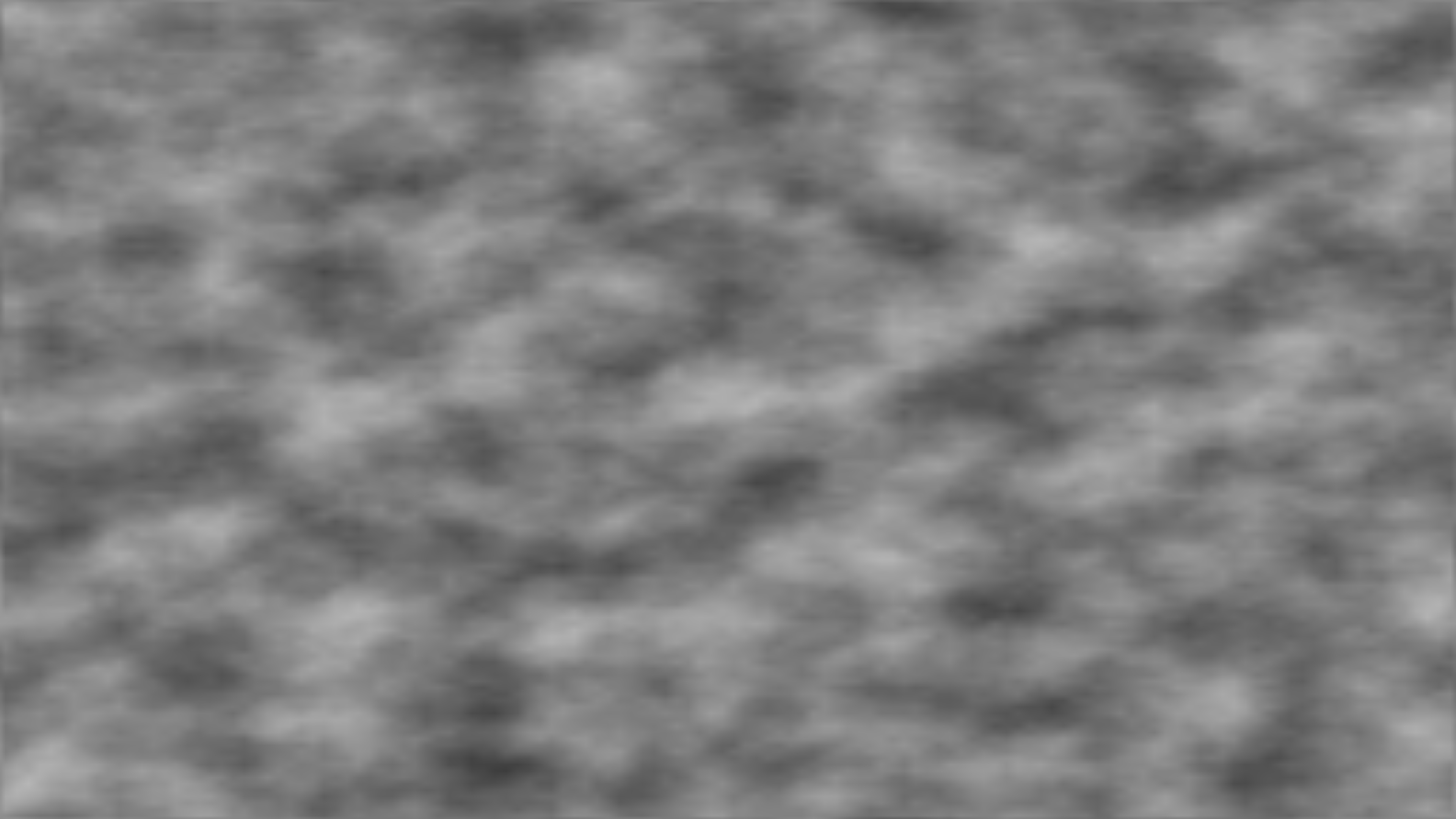
Noise Gradient FBM 2D
Hyper-detailed procedural erosion mapping for intensely rugged surfaces.
Layering Fractional Brownian Motion over a gradient foundation replicates the intense, chaotic roughness of nature through the summation of multiple continuous octaves. To calculate this fractal complexity for deep creative expression, STD.DEV implements a highly optimized, multi-pass spatial accumulator directly within the GPU shader pipeline. By simultaneously evaluating exponentially scaling frequencies and amplitudes across the coordinate grid, STD.DEV natively generates intensely detailed, hyper-realistic erosion patterns without compromising rendering speed. Furthermore, the generated noise is seamlessly tileable across infinite coordinate spaces.

Tactile Fractal Scaling
In an immersive environment, users must be able to feel the procedural roughness of the digital world. Within the STD.DEV architecture, hardware inputs like a multi-touch pinch or device gyroscope act as direct modulators for the fractal octaves. As a user zooms into the procedural surface, the system dynamically calculates higher frequencies of mathematical detail, allowing the user to dive infinitely deeper into the chaotic structure. This transforms a flat texture into an incredibly fun, infinitely explorable microscopic landscape.
Generative AI Diffusion Guidance
The chaotic, highly structured roughness of multi-octave FBM provides a profoundly organic mask for generative models. The immense mathematical detail generated by the fractal noise acts as a strict structural blueprint for diffusion pipelines. By routing this exact multi-layered roughness directly into an AI model's control network, STD.DEV dictates how the AI interprets surface degradation and organic chaos. The resulting generated media doesn't just look detailed—it rusts, erodes, and shatters according to the exact frequency scaling of pure mathematical fractals.
How does STD.DEV calculate fractal complexity for creative expression?
STD.DEV calculates fractal complexity by implementing a highly optimized, multi-pass spatial accumulator directly within the GPU shader pipeline, simultaneously evaluating exponentially scaling frequencies and amplitudes across the coordinate grid.
What is the benefit of using STD.DEV's generated noise?
How does STD.DEV enable users to interact with procedural roughness in immersive environments?
How does STD.DEV's fractal noise function as a mask for generative AI models?
What is the business value of generating hyper-realistic erosion patterns?
How does STD.DEV enhance user engagement with digital environments?
What principle guides the creation of detailed erosion patterns in STD.DEV?
Why does STD.DEV use a multi-pass spatial accumulator in the GPU shader pipeline?
What is the philosophical approach behind using FBM for generative AI guidance?
How does STD.DEV ensure generated media adheres to fractal principles?