Projects
Dot Translate
The First Braille Translator Based on AI
Dot Translate is the world’s first AI-driven braille translation engine, engineered to instantly convert digital text into Grade 2 Braille at near-human accuracy. While sighted individuals enjoy seamless access to almost any digital media, 285 million blind and visually impaired people worldwide face a massive information gap. Only 3% of all published text exists in braille because conventional translation requires manual input by human experts, making conversion prohibitively expensive for publishers and inaccessible for individuals. In education, braille literacy is vital: 90% of visually impaired individuals who cannot read braille face unemployment.
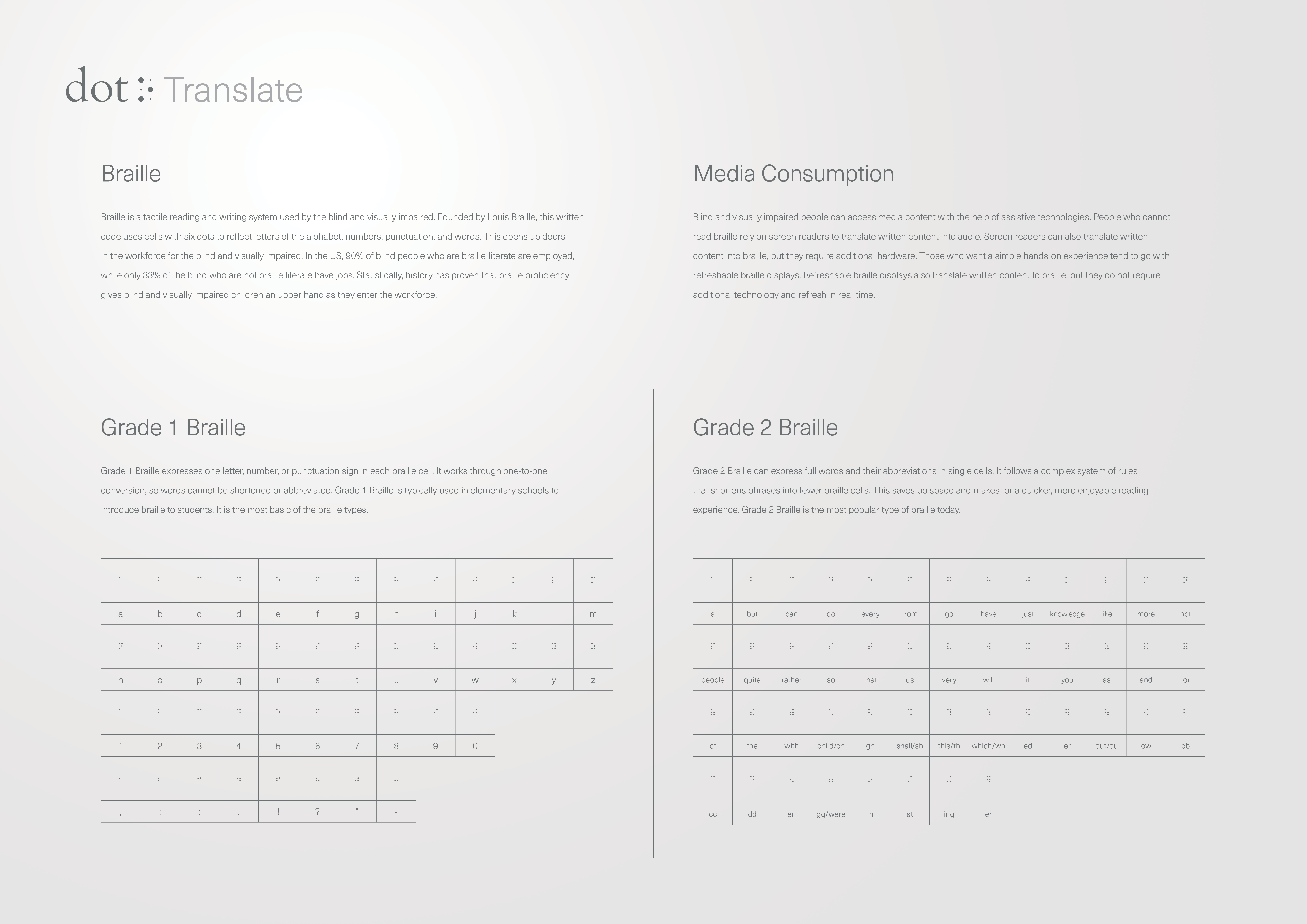
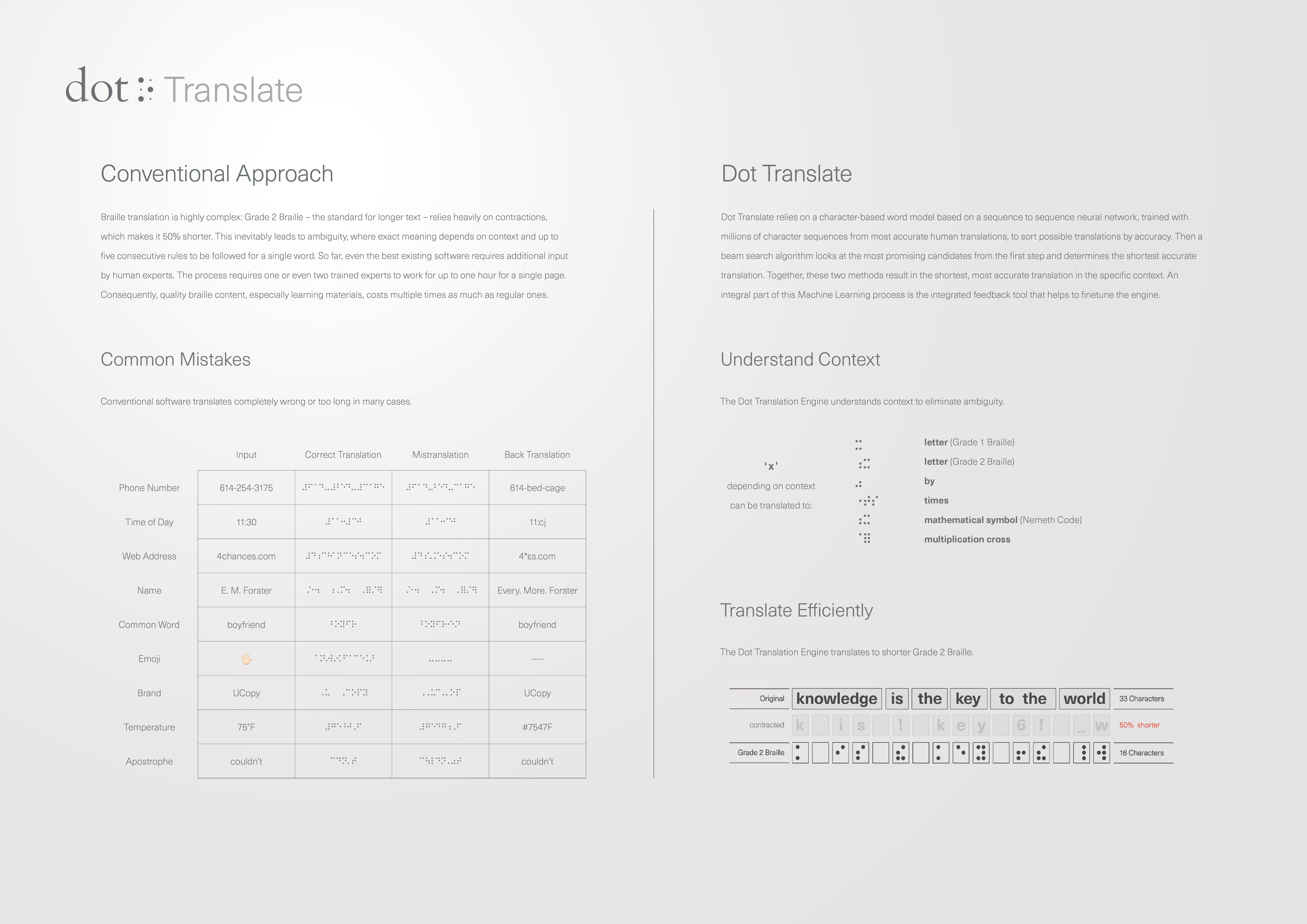
Navigating the intricate syntax of Grade 2 Braille requires understanding contextual nuances and resolving complex linguistic ambiguities in real time. As the standard for extended reading, Grade 2 Braille relies heavily on contractions to compress text by 50%. However, selecting the correct contraction often depends on sentence context and up to five consecutive grammatical rules for a single word, causing traditional rule-based software to fail without expert human correction.
The Technical Challenge
Legacy translation software relies on static, rule-based lookup tables that struggle with homographs, syntax shifts, and multi-rule contraction overlaps. Because Grade 2 Braille contractions drastically shorten text while shifting meaning based on context, deterministic code cannot resolve ambiguities automatically. Achieving near-human translation accuracy demanded moving beyond rigid rule sets into a context-aware machine learning model capable of evaluating complex linguistic sequences dynamically.
The Solution
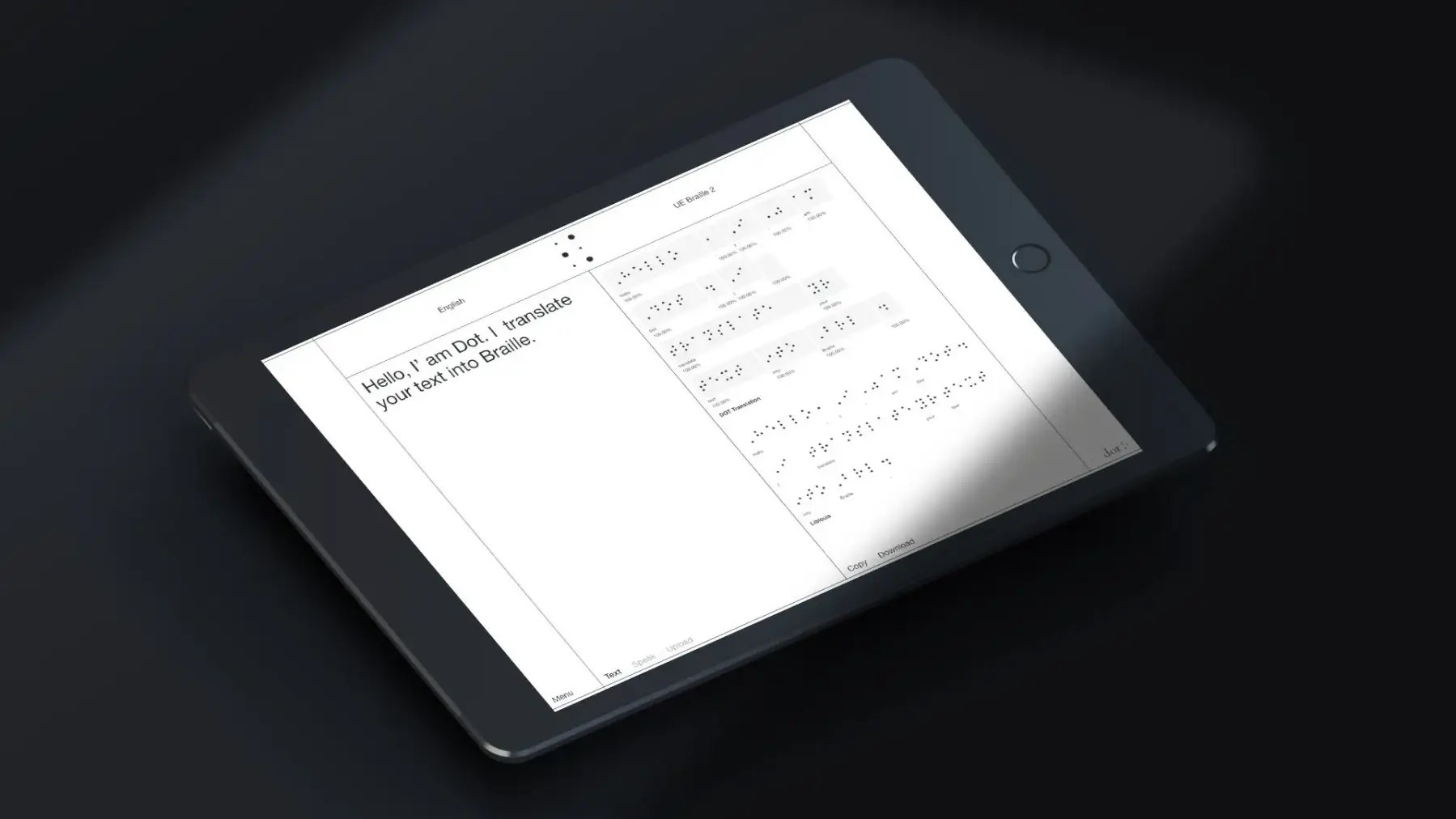
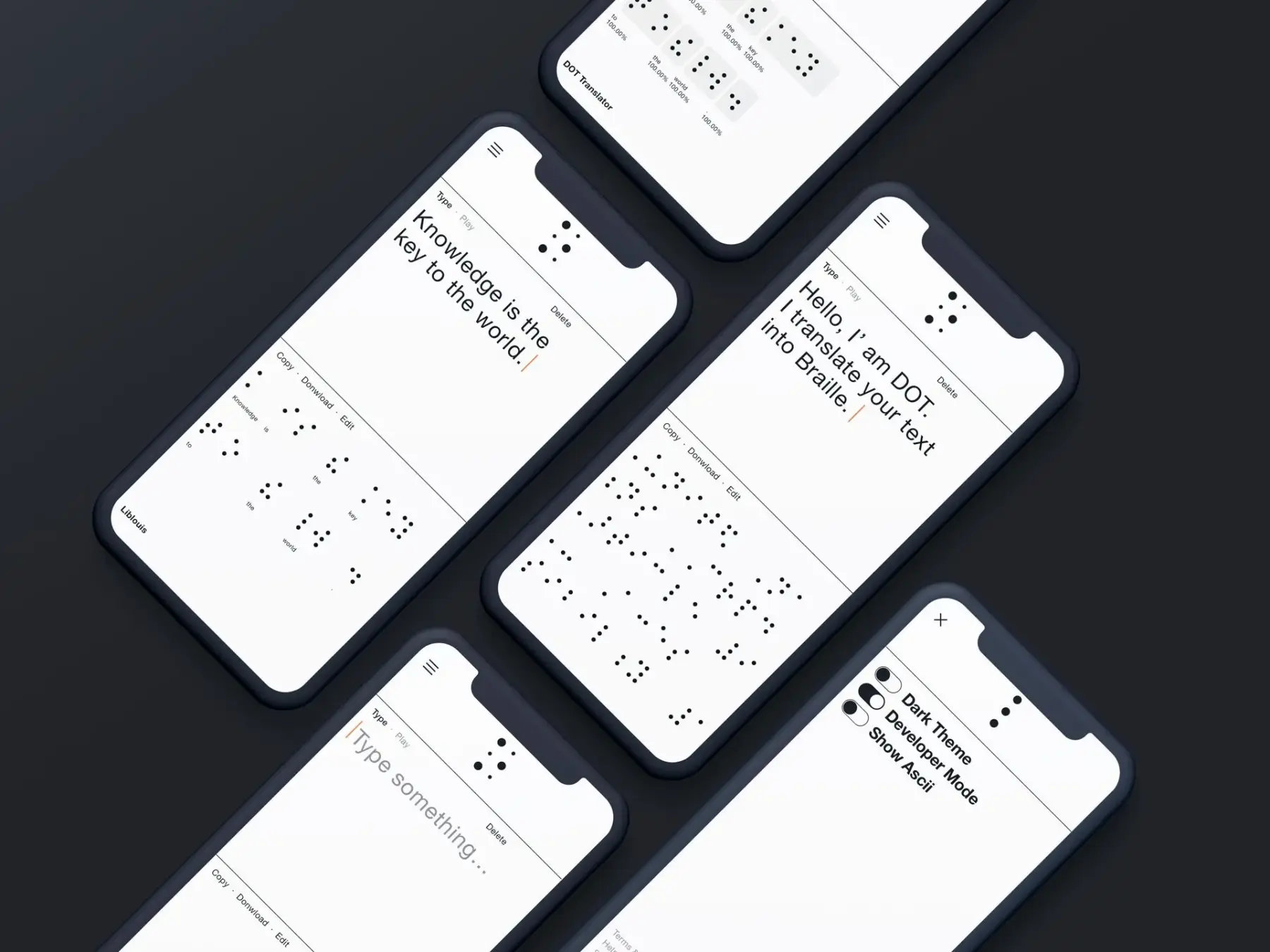
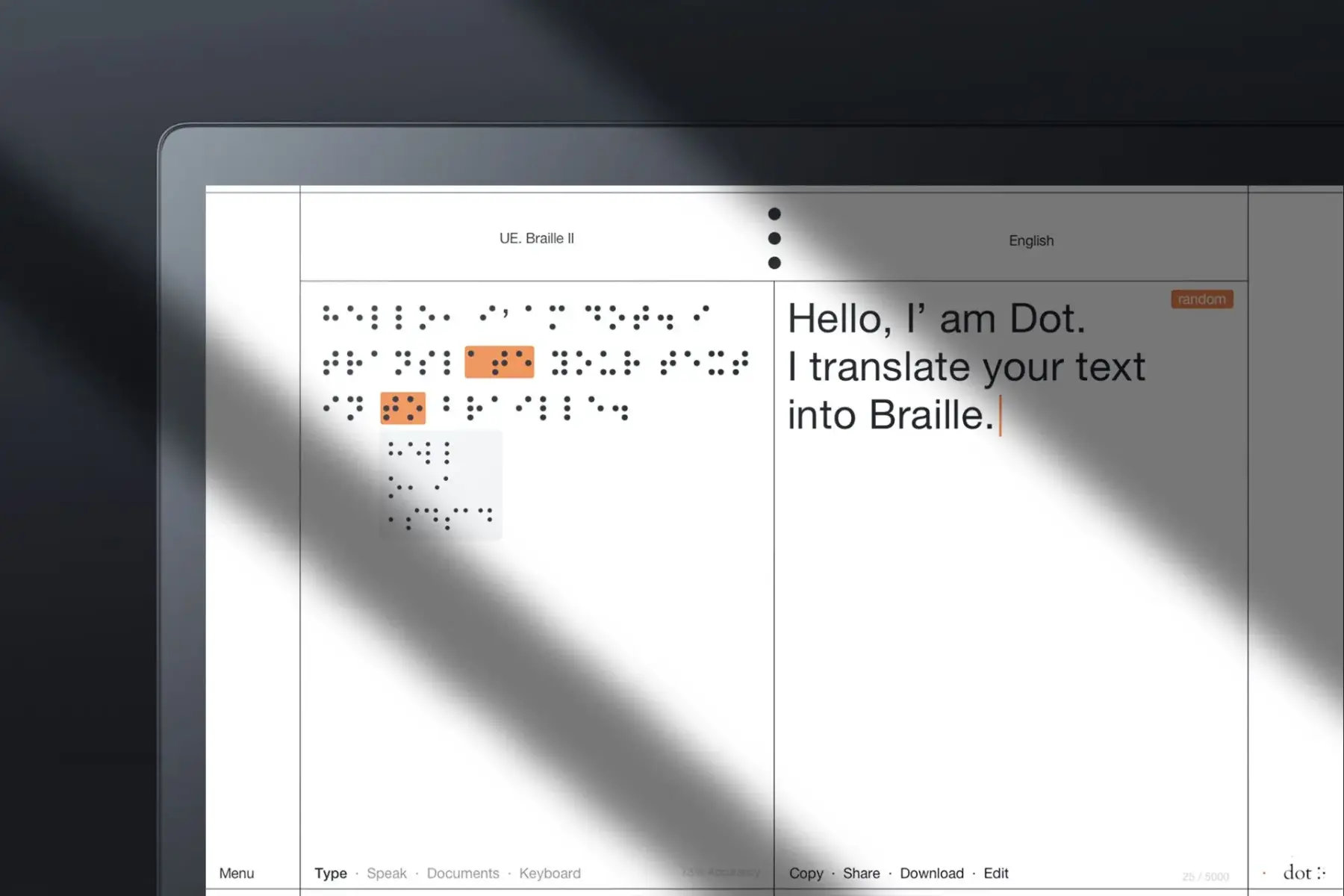
To eliminate manual translation bottlenecks, Dot Translate enhances rule-based translation with artificial intelligence. The platform employs a character-based sequence-to-sequence neural network trained on millions of highly accurate human translations. Combined with an algorithmic beam search engine, the system analyzes full sentence context to evaluate contraction candidates and determine the shortest, most accurate Grade 2 output in real time.
Impact
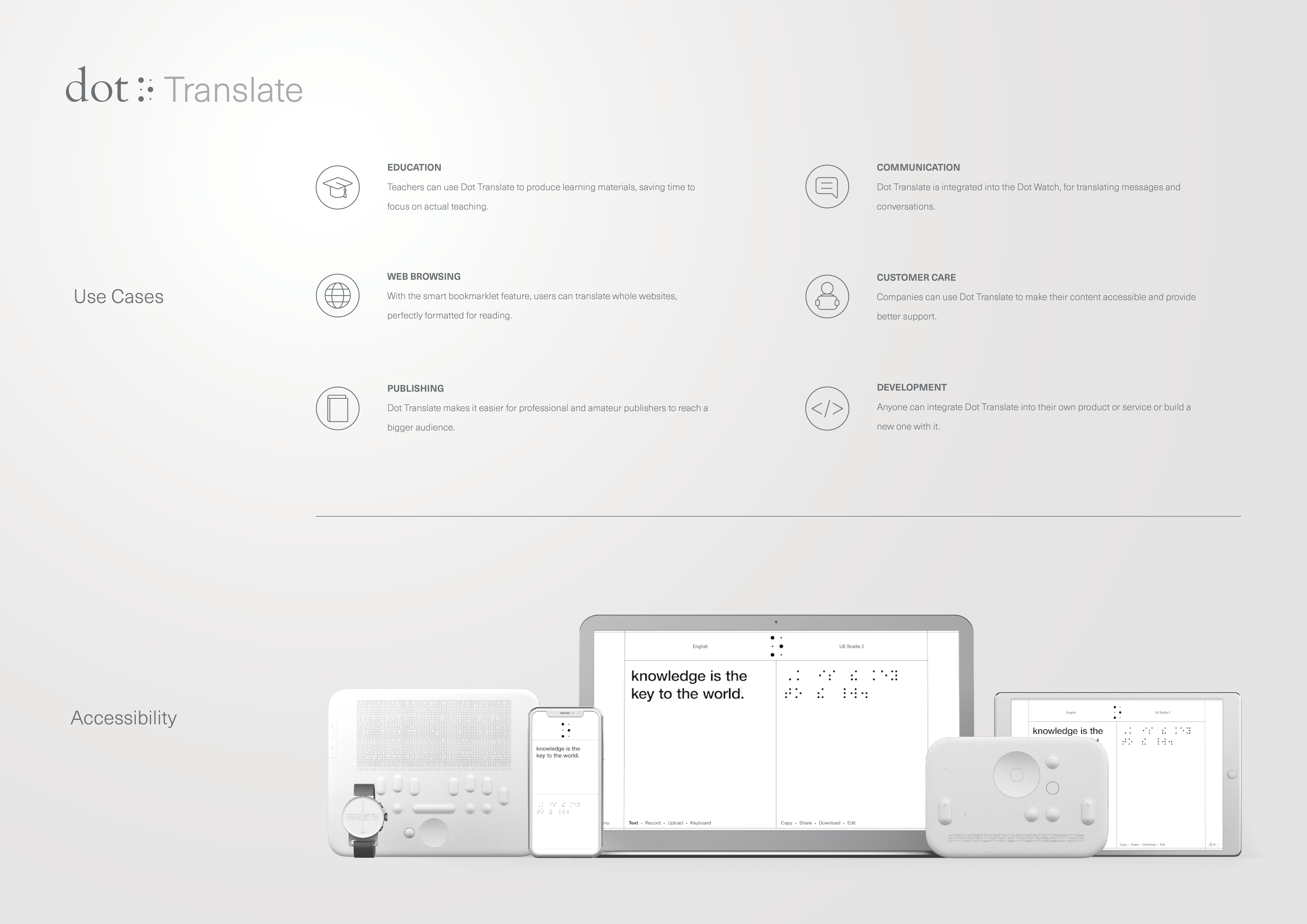
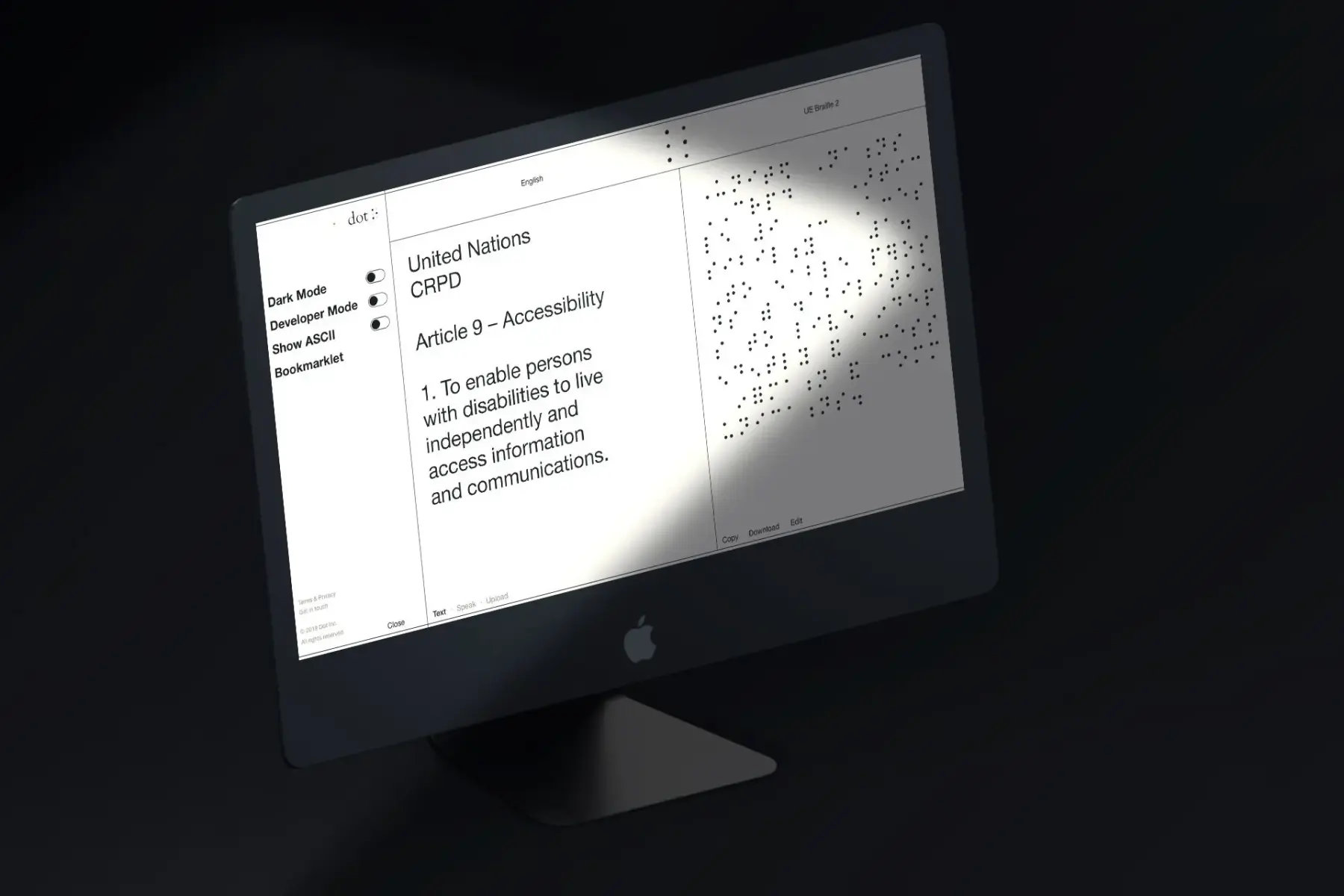
By automating Grade 2 translation at near-human accuracy, Dot Translate empowers publishers, educators, and individuals to convert digital books, websites, and documents into braille effortlessly. By reducing translation time and cost to near zero, the platform scales braille literacy worldwide, unlocking educational and career opportunities for millions of visually impaired people.
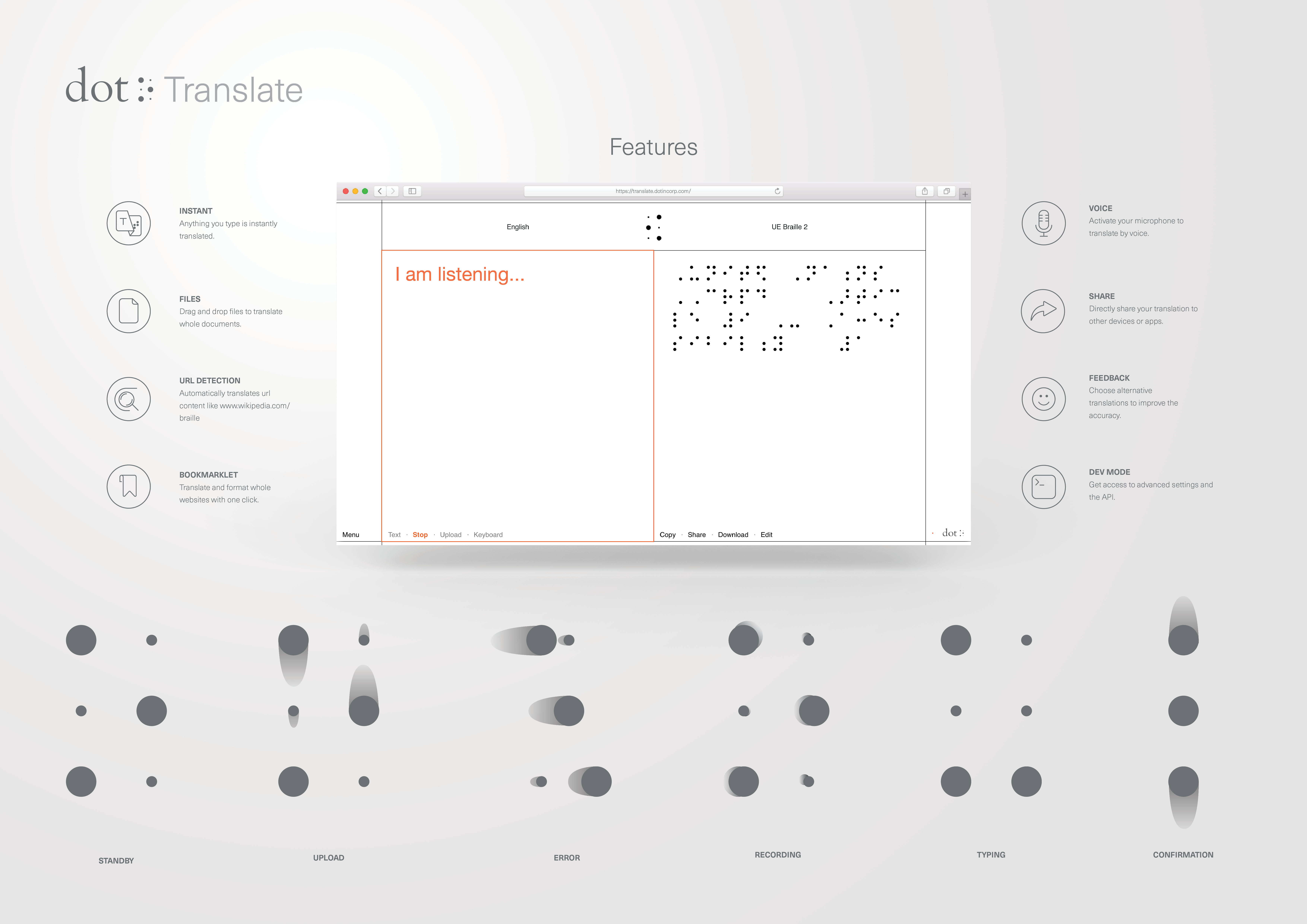
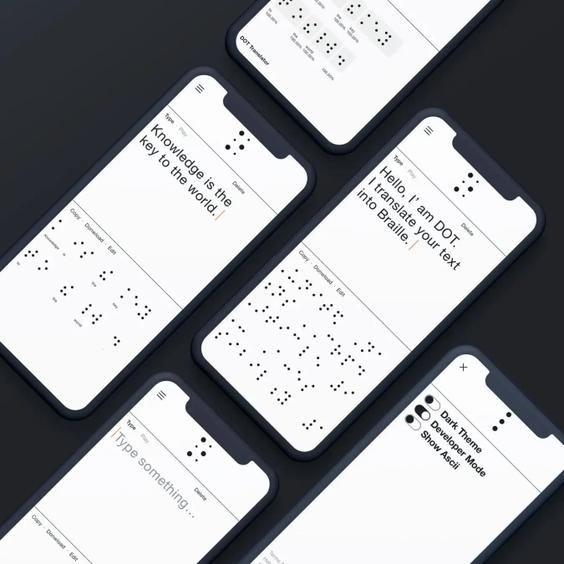
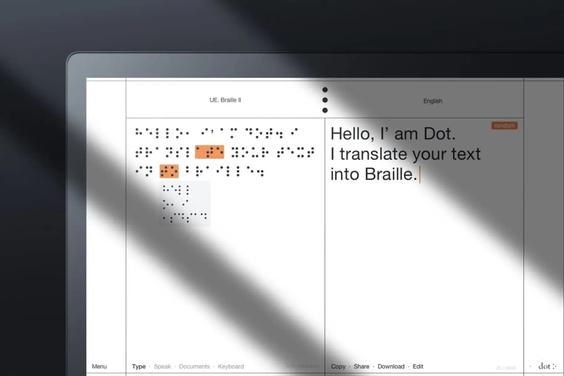
To give this invisible neural network a tangible, interactive presence, STD.DEV engineered the Dot Avatar. While the backend AI processed complex linguistic datasets, Daniel Kuhnlein developed a custom, math-driven GPU architecture to visually represent the system's real-time states. Delivered as a portable web component, this interactive interface bridges human input and machine processing across three core deliverables:
1. Dot Avatar Engine
Engineering a custom procedural shader architecture using Signed Distance Fields (SDF) to visually represent the AI’s internal processing logic. This purely mathematical approach allowed the avatar dots to fluidly morph between active states—such as Standby, Recording, and Typing—while integrating interactive tactile physics. As users type or move their cursor, the engine dynamically displaces the geometry and visually translates standard text glyphs into their corresponding braille equivalents on the fly with zero-latency rendering.
2. Portable Web Component
Packaging the complex GPU shader logic into a lightweight, modular web component. This zero-dependency architecture ensured that the interactive Dot Avatar could be seamlessly embedded into the broader translator interface developed by our digital agency partners, maintaining peak 60fps performance across all browsers without introducing structural bloat.
3. Campaign Media Exporter
Building a custom, GPU-driven rendering tool that enabled the creative team to capture and export high-resolution animations of the avatar's state transitions. This standalone suite allowed for the instant generation of lossless video sequences and visual assets, ensuring flawless, brand-consistent typography and motion across all social media and marketing channels.
Dot Translate demonstrates how creative engineering can dismantle systemic barriers to accessibility. By combining advanced neural network processing with an intuitive, highly tactile visual interface, the system establishes a new baseline for digital inclusion—ensuring that educational resources and literature are accessible to everyone.
Credits
Strategy & Creative Production
Serviceplan Innovation
Design
Moby Digg
AI Avatar, GPU Shaders & Web Component
STD.DEV (Daniel Kuhnlein)
Web Development & Interface Integration
Hyperinteractive
What is Dot Translate and what problem does it solve?
Dot Translate is the world's first AI-driven braille translation engine designed to convert digital text into Grade 2 Braille, addressing the significant information gap faced by blind and visually impaired individuals due to the high cost and inaccessibility of traditional braille conversion.
Why is Grade 2 Braille important, and what makes its translation complex?
How does Dot Translate overcome the limitations of traditional braille translation software?
What is the business impact of automating Grade 2 braille translation with Dot Translate?
How does the Dot Avatar provide a tangible interface for the AI?
What technical approach was used to create the Dot Avatar Engine?
What are the benefits of the portable web component for the Dot Avatar?
How does Dot Translate aim to dismantle systemic barriers to accessibility?
What was the role of STD.DEV in the Dot Translate project?
What is the purpose of the Campaign Media Exporter?