Projects
The One Show - Turn Passion into Profession
Robotic Light Painting & Hardware Engineering
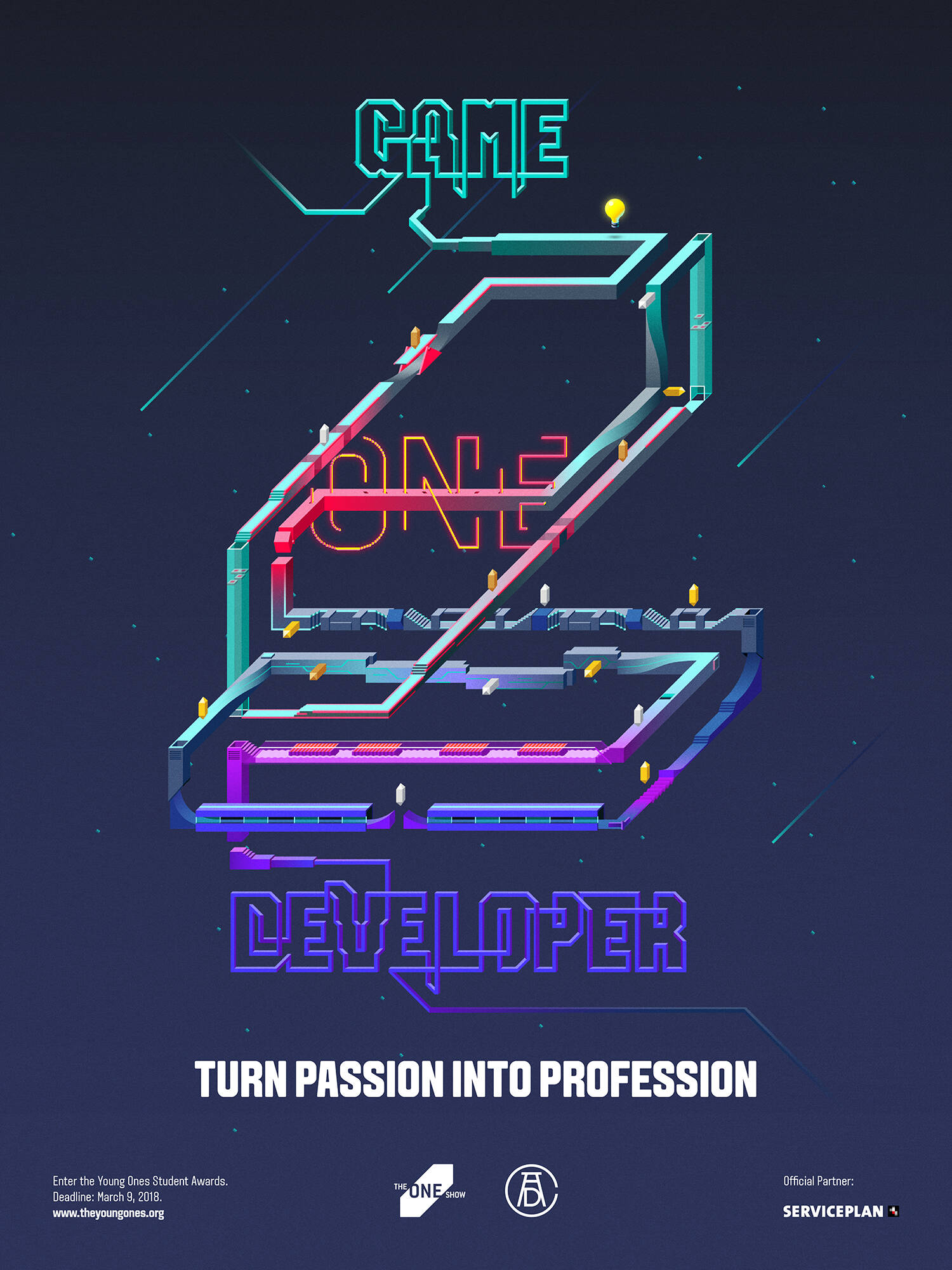
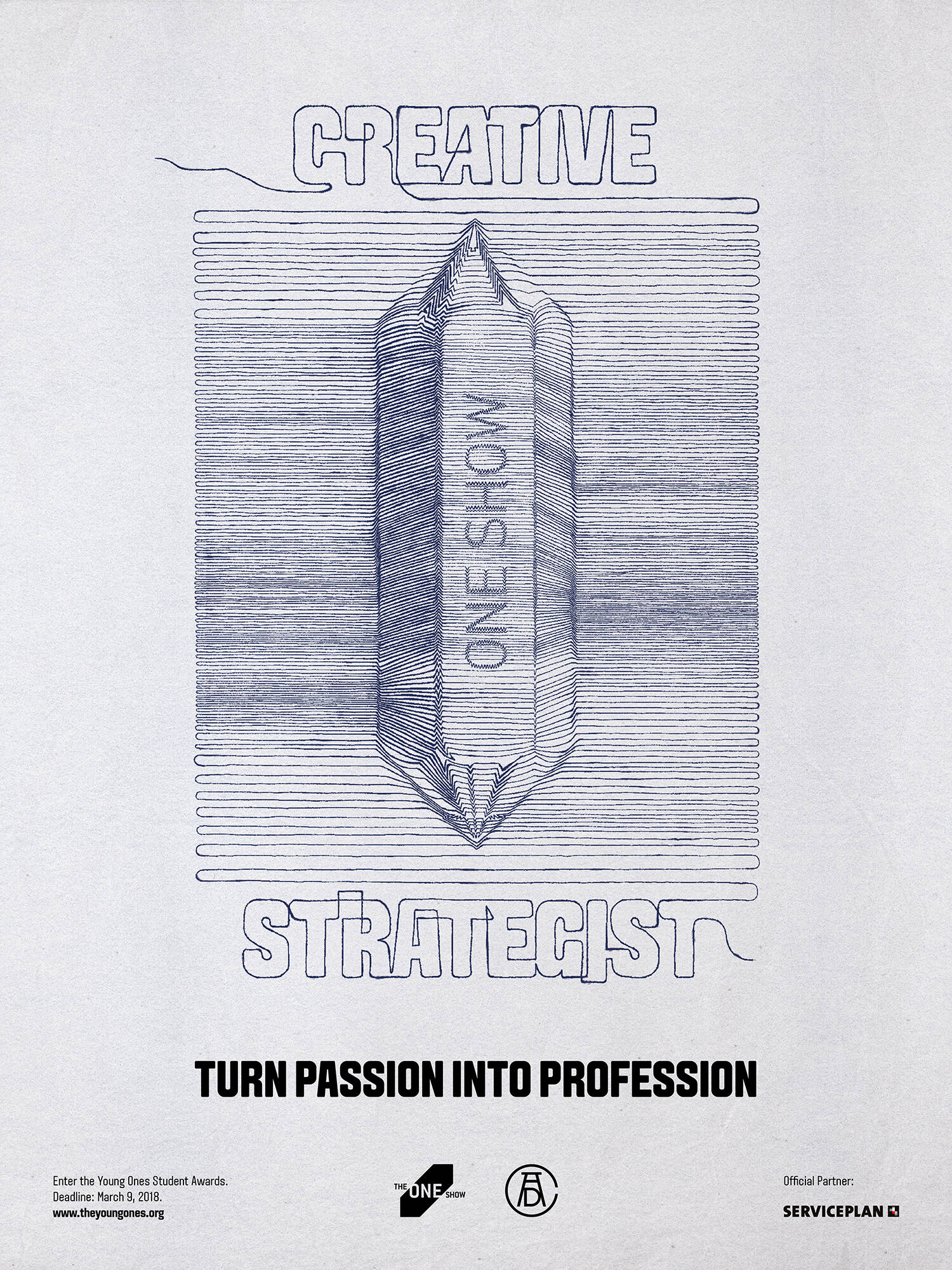
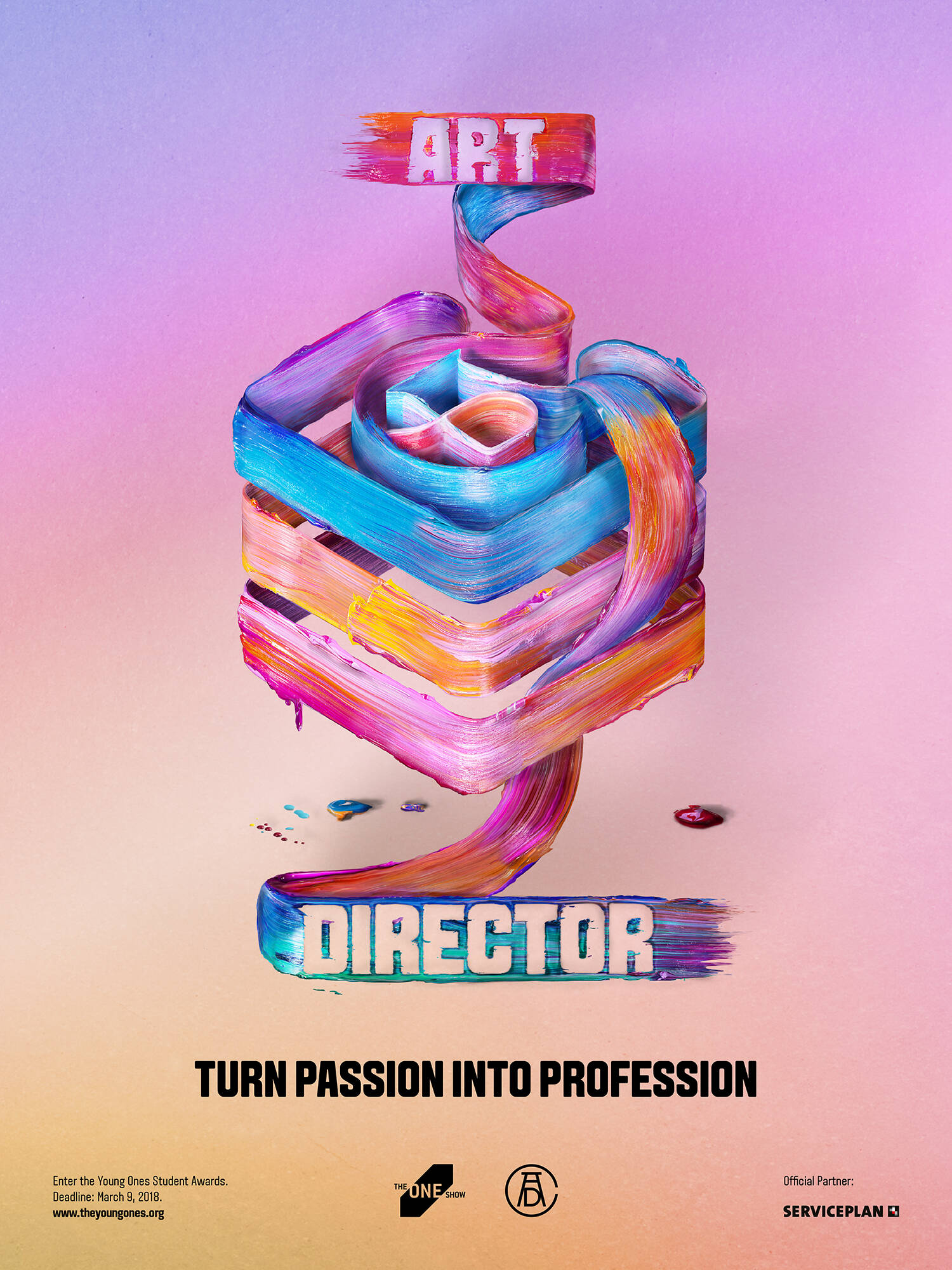
The One Show - Turn Passion into Profession is an international campaign created for The One Club for Creativity to promote the world’s premier student award competition, The Young Ones. Organised alongside The One Show and ADC Global in New York, the initiative connects emerging creative talent across 30 countries to top global employers. Under the motto “Turn Passion into Profession,” the campaign demonstrates how student work in illustration, game design, and interaction design transforms directly into a professional creative career.
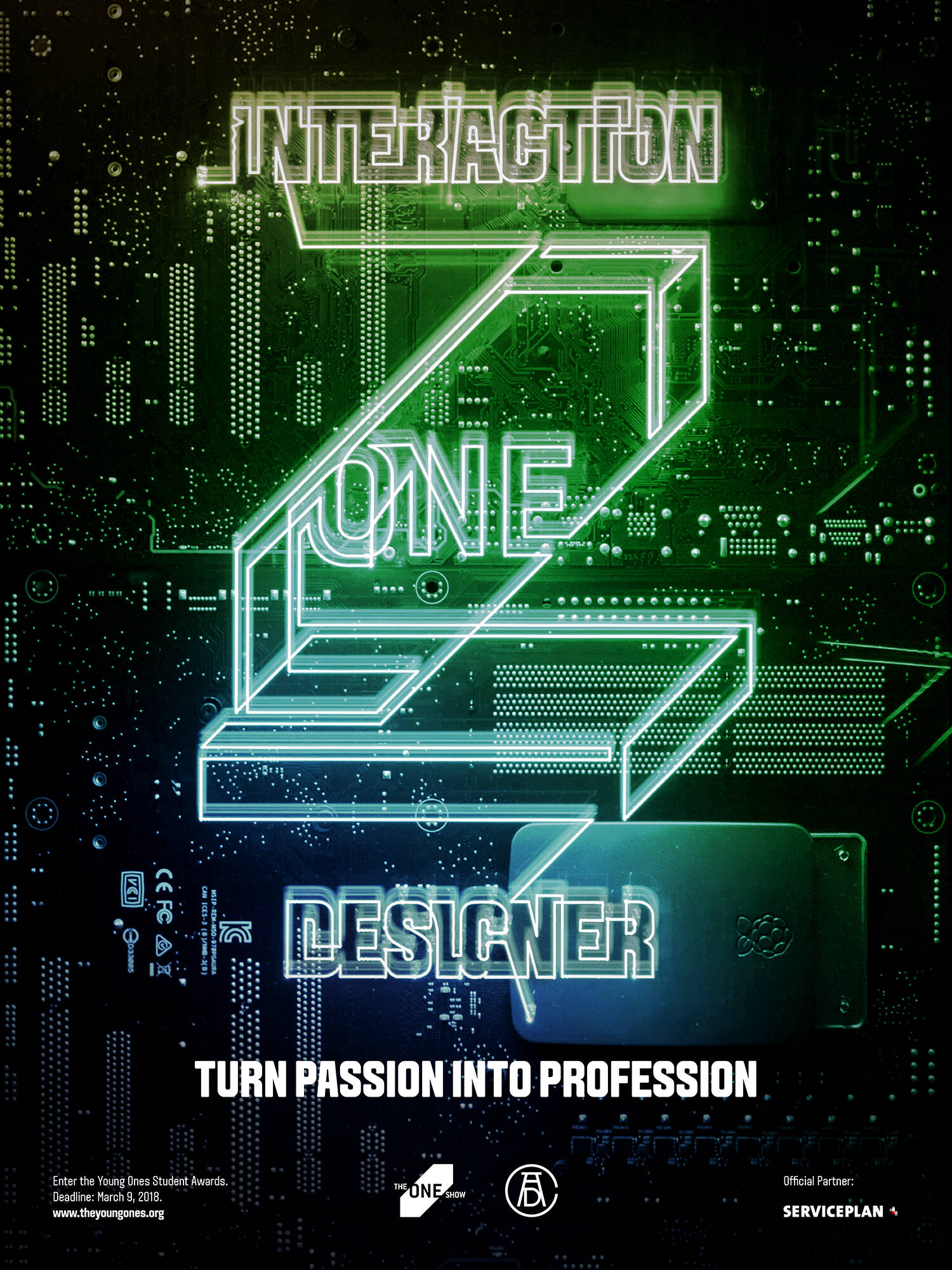
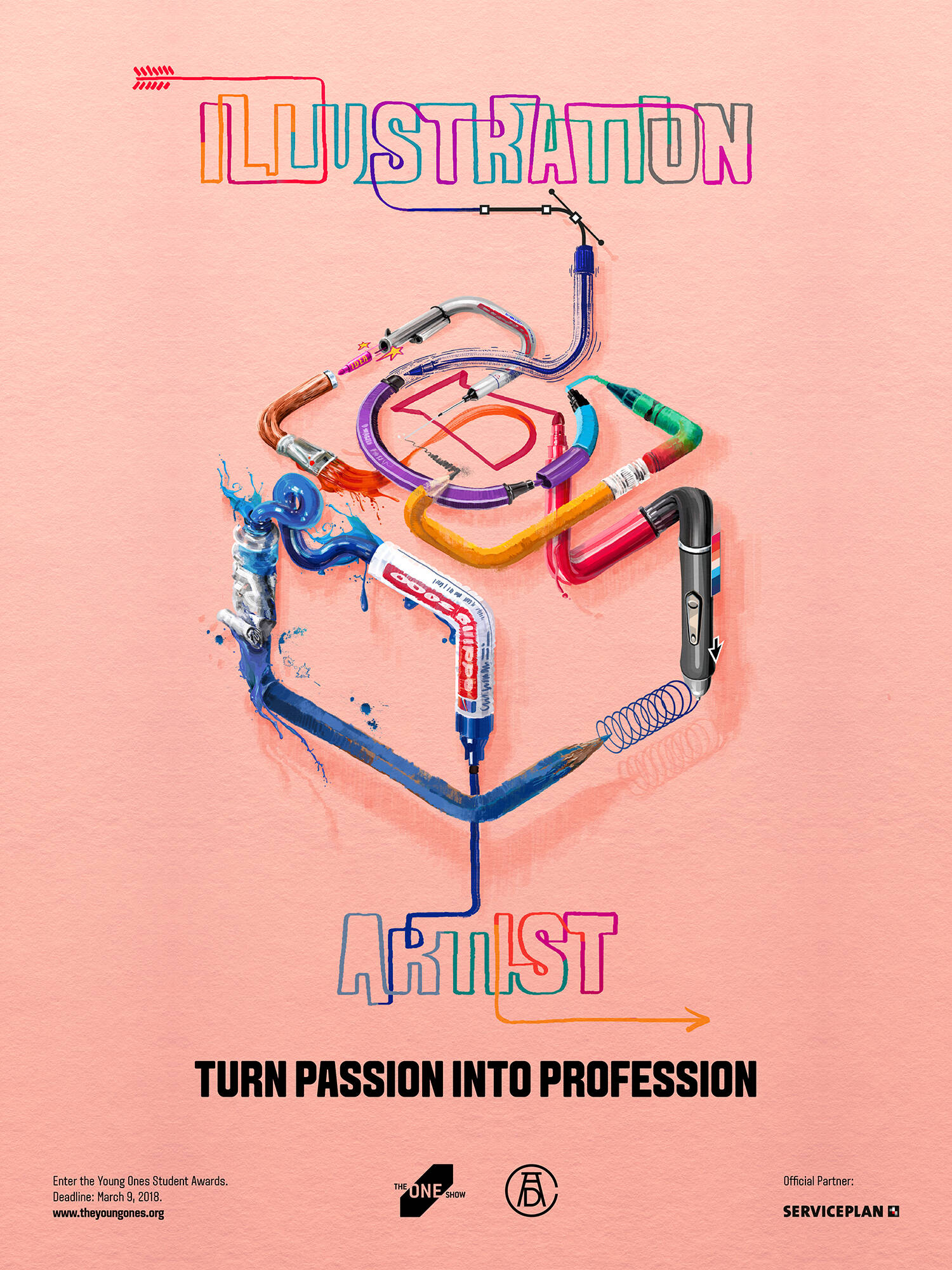
The campaign reinterprets the iconic One Show Pencil trophy into a series of elaborate “one-line drawings,” mapping the continuous path from a student’s passion to a professional career. To promote participation, Serviceplan Group partnered with select artists to craft bespoke visual motifs. Emphasizing raw, authentic craft, each discipline was represented using its literal tools—from digitizing actual, thick paint strokes for the “Art Director” to linking physical markers and styluses end-to-end for the “Illustration Artist.” Tasked with visualizing the “Interaction Designer,” STD.DEV chose to bypass traditional illustration entirely, conceptualizing an artwork where hardware and code became the literal medium.
The Technical Challenge
Interaction Design fundamentally bridges digital software with physical hardware. To represent this, STD.DEV designed a powerful visual metaphor: a continuous, multi-colored path of pure data (light) hovering precisely over an exposed computer motherboard. However, achieving absolute digital authenticity meant avoiding 3D rendering or Photoshop entirely. The challenge was to manifest programmatic logic in the real world. Because human-drawn long-exposure photography lacks the mathematical perfection required to draw the One Show Pencil, Daniel Kuhnlein had to engineer a way for code to physically paint the image.
The Solution
To bring this concept to reality, STD.DEV engineered a custom robotics pipeline, repurposing an AxiDraw V3 2D linear stage plotter into a precision light-painting machine. Utilizing a Raspberry Pi, Daniel Kuhnlein programmed a low-level hardware interface to drive a custom micro-electronic payload featuring multi-channel RGB LEDs. A bespoke Node.js architecture synchronized the exact physical X/Y coordinate vectors of the robotic arm with real-time GPIO electrical pulses, allowing a camera to capture the mathematically perfect path of light hovering over the hardware.
Impact
This hardware-driven approach proved that code can literally paint physical reality. The resulting long-exposure photography achieved a level of luminous precision impossible through manual techniques or digital fakes. The artwork anchored global university exhibitions and generated massive international print and out-of-home (OOH) campaign collateral. Ultimately, the campaign successfully drove global participation, connecting emerging creatives from 30 countries with top employers and a chance to exhibit at the United Nations in New York.
To elevate code from a software execution layer into a physical art form, STD.DEV built a standalone hardware orchestration pipeline. By marrying precise robotic motion control with synchronized light emission and photographic capture, Daniel Kuhnlein delivered the creative tech components across three core deliverables:


1. Robotic Hardware & LED Integration
Engineering a custom hardware bridge to transform a standard AxiDraw V3 linear stage into an automated light-painting rig. STD.DEV designed a micro-electronic payload featuring programmable RGB LEDs driven by a Raspberry Pi. By interfacing directly with the bare-metal GPIO pins, the system exerted absolute control over the light channels. This physical setup was meticulously calibrated to hover the light source at a precise Z-axis elevation directly above the physical motherboard used as the photographic backdrop.
2. Procedural Vector Translation & Motion Sync
Writing the Node.js architecture necessary to synchronize mechanical movement with light output. The system ingested complex SVG vector paths, parsing bezier curves and mathematically interpolating them into thousands of discrete physical coordinate steps mapped to the AxiDraw’s massive 12000x8720 physical boundary. A custom recursive buffer fed these absolute coordinates to the motors with micrometer precision. Simultaneously, an execution loop triggered real-time GPIO state changes, shifting the RGB LED colors on the fly as the robot physically traversed the path.
3. Physical-to-Digital Light Painting
Executing the final high-resolution capture by synchronizing the robotic choreography with long-exposure photography in a controlled darkroom environment. The resulting physical asset was captured completely in-camera, bypassing the need for heavy digital manipulation. This final image provided the creative team with a pristine, authentic visual for large-format out-of-home (OOH) billboards and global print campaigns.
The “Interaction Designer” motif demonstrates that creative engineering extends far beyond the browser screen. By unifying complex vector mathematics, micro-electronics, and robotic motion control, STD.DEV provided emerging talents with a compelling visual metaphor for transforming technical passion into a professional, world-shaping career.
Credits
Advertising Agency & Creative Direction
Serviceplan Group / Serviceplan Innovation
Robotic Engineering & Light Painting Orchestration
STD.DEV (Daniel Kuhnlein)
Participating Artists & Illustrators
Daniel Kuhnlein, Frank Graefe
How did STD.DEV represent the 'Interaction Designer' in the campaign?
STD.DEV represented the 'Interaction Designer' by conceptualizing an artwork where hardware and code became the literal medium, using a continuous, multi-colored path of pure data (light) hovering precisely over an exposed computer motherboard.
What custom robotics pipeline was engineered to create the 'Interaction Designer' artwork?
How did the campaign connect emerging creative talent with employers?
What was the specific challenge in visualizing the 'Interaction Designer' artwork?
What was the purpose of the Node.js architecture in the light-painting machine?
How did the campaign emphasize authentic craft for each creative discipline?
What was the impact of the hardware-driven approach in the campaign?
What specific deliverables did Daniel Kuhnlein provide for the 'Interaction Designer' motif?
How was the 'Interaction Designer' artwork captured with mathematical perfection?
What was the overall goal of The One Show's 'Turn Passion into Profession' campaign?